Open frame computer cases make component access, troubleshooting, and airflow a priority. They are especially useful for test benches, overclocking experiments, custom builds, and frequent hardware changes.
Our roundup covers ATX, Micro-ATX, and Mini-ITX options, from compact DIY brackets to larger open-air chassis with room for demanding components. Use the guide below to match each design to your motherboard, workspace, and building style.
Best 10 Open Frame Computer Cases Picks for 2026
Best Budget Test Bench

- ATX, Micro ATX, and Mini ITX support
- Unrestricted graphics-card dimensions
- 0.8mm SPCC open-air construction
Best For: Budget DIY builds, testing, and maintenance
Best Tempered-Glass Showcase

- Tempered-glass component visibility
- Supports up to a 420mm radiator
- Eight expansion slots and GPU holder
Best For: Showcase gaming builds with substantial cooling
Best Versatile Server Chassis

- Supports ITX through EATX motherboards
- Accepts ATX, SFX, and 1U PSUs
- Compatible with air or water cooling
Best For: Custom EATX, server, and dual-CPU builds
Best Hardware Testing Platform

- Reinforced 0.8mm SPCC steel frame
- Unrestricted graphics-card placement
- Seven slots and two drive bays
Best For: Overclocking, hardware testing, and maintenance
Best Compact Mesh Pick
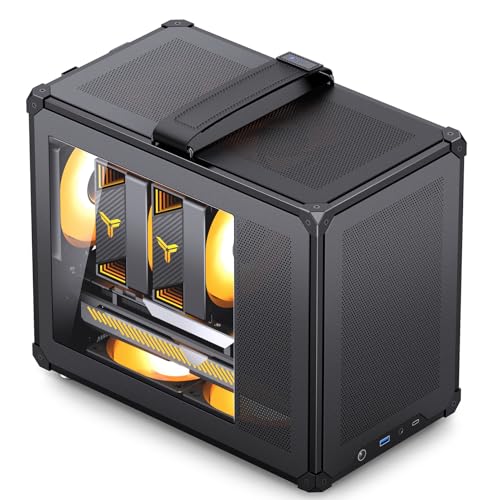
- All-side mesh promotes airflow
- Tool-free panels simplify building
- Supports GPUs up to 335mm
Best For: Compact Micro ATX or Mini-ITX builds
Best Acrylic Test Bench

- Transparent acrylic open design
- Easy access for testing and maintenance
- Supports ITX boards and long GPUs
Best For: ITX testing, overclocking, and showcase builds
Best Expandable Workstation Bench
JOYJOM PS091 Open Air Test Bench

- Supports EATX through ITX boards
- Up to eight 120mm fans
- Stackable and rack-friendly design
Best For: Workstations, server racks, and hardware labs
Simple Portable Option
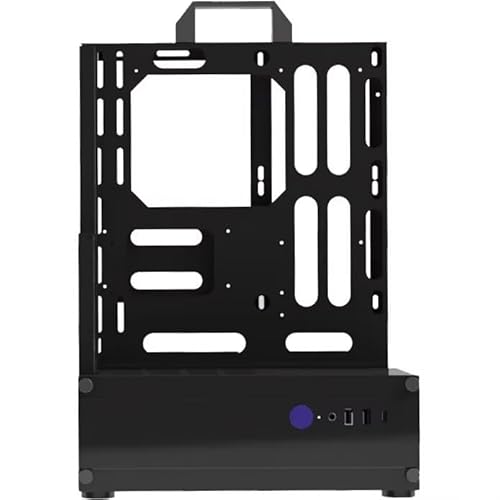
- Zinc-coated steel construction
- Supports ATX, ITX, and Micro ATX
- Open structure for easy component access
Best For: Straightforward ATX test builds
Best for Workstations

- Rigid SPCC construction for demanding builds
- Stackable up to 10 units horizontally
- Extensive fan, radiator, and drive support
Best For: Workstations, servers, and multi-unit setups
Best Budget Test Bench – Compact ATX Open Air Case
This compact option among open frame computer cases supports ATX, Micro ATX, and Mini ITX motherboards while leaving graphics-card length and width unrestricted. Its 0.8mm SPCC construction and open-air layout make it a practical choice for straightforward DIY builds, testing, and maintenance.
Best For: Budget-conscious builders and hardware testing setups using standard ATX power supplies.
Pros:
- Supports ATX, Micro ATX, and Mini ITX motherboards.
- Graphics-card dimensions are not limited by the frame.
- Compatible with one HDD and one SSD.
Cons:
- Offers only one internal drive bay.
- Open-air construction provides less physical protection than an enclosed case.
Choose this JOYJOM chassis when simplicity, broad mainstream motherboard support, and easy component access matter more than enclosure-style protection or extensive storage capacity.
Best Tempered-Glass Showcase – Thermaltake Core P3 TG Pro
Thermaltake Core P3 TG Pro Open Frame ATX Compatible PC Case CA-1G4-00M1WN-09 CS8593
Check Price On AmazonThe Thermaltake Core P3 TG Pro brings a more finished presentation to open frame computer cases with open-frame construction and a tempered-glass panel. It supports ATX, Micro ATX, and Mini ITX systems and includes mounting flexibility for large cooling hardware and graphics cards.
Best For: Showcase gaming builds that need tempered-glass visibility and support for substantial cooling hardware.
Pros:
- Tempered-glass panel displays the internal components.
- Supports ATX, Micro ATX, and Mini ITX motherboards.
- Accommodates a 420mm, three-row radiator and a 140mm case fan.
- Includes a GPU holder and eight expansion slots.
Cons:
- At 7 kg, it is heavier than the compact test-bench options here.
- Its large mid-tower dimensions require more desk or floor space.
This is the stronger fit for a polished, component-visible gaming system, particularly if you want room for large graphics cards, power supplies, and advanced radiator configurations.
Best Versatile Server Chassis – DIY EATX Aluminum Open Frame
This aluminum open-frame chassis stands out among open frame computer cases for its broad motherboard and power-supply compatibility. It supports ITX, MATX, ATX, and EATX boards, accepts ATX, SFX, and 1U power supplies, and is designed for both air and water cooling.
Best For: Enthusiasts building highly customized EATX, dual-CPU, server, or high-performance systems.
Pros:
- Supports motherboard formats from ITX through EATX.
- Accepts ATX, SFX, and 1U power supplies.
- Accommodates graphics cards without a stated length limit.
- Supports both air and water cooling.
Cons:
- Only two expansion slots are listed in the specifications.
- Its highly customizable design may require more involved assembly.
- The listed color is red, which may not suit every build theme.
With aluminum construction and unusually broad platform support, this DALAIBUKESI chassis is aimed at builders who prioritize configuration flexibility over a conventional, ready-to-install case layout.
Best Hardware Testing Platform – Reinforced ATX Test Bench
The AL01 is a reinforced choice among open frame computer cases, using 0.8mm SPCC steel, folded-edge reinforcement, and triangular bracing. Its open-air design supports ATX, Micro ATX, and ITX motherboards, with unrestricted graphics-card placement for testing and overclocking work.
Best For: Hardware testers, overclockers, and DIY builders who want a sturdy open platform with flexible graphics-card placement.
Pros:
- Reinforced 0.8mm SPCC steel construction.
- Supports ATX, Micro ATX, and ITX motherboards.
- Fits standard ATX power supplies and includes cable-routing holes.
- Provides seven expansion slots and two internal drive bays.
Cons:
- Open construction leaves components exposed to the surrounding environment.
- The specified motherboard support does not list E-ATX as standard support.
The AL01 makes the most sense when structural stability, service access, and testing flexibility are priorities. Its extended 440mm width also suits server-cabinet installation scenarios noted by the manufacturer.
Best Compact Mesh Pick – JONSBO C6 MAX
The JONSBO C6 MAX is a compact Micro ATX case for builders who want open frame computer cases-style airflow without giving up a more enclosed chassis. Its mesh panels, tool-free access, and adjustable handle make it practical for compact desktop builds.
Best For: Compact Micro ATX or Mini-ITX systems that prioritize airflow and easy maintenance.
Pros:
- Mesh panels on all sides support airflow.
- Tool-free front, upper, and side-panel access simplifies installation.
- Supports GPUs up to 335mm and CPU coolers up to 170mm, depending on configuration.
- Includes an adjustable Magic Hook Handle.
Cons:
- Only supports Micro ATX and Mini-ITX motherboards.
- Drive capacity is limited to one 3.5-inch HDD or one 2.5-inch SSD.
- ATX power-supply length depends on the graphics-card slot configuration.
Choose this model when you want a small, highly ventilated case with convenient access for assembly and upgrades. Check component clearances carefully, especially if pairing a long GPU with a larger ATX power supply.
Best Acrylic Test Bench – Yoidesu Open Frame Test Bench
The Yoidesu Open Frame Test Bench is a minimalist option among open frame computer cases, using a transparent acrylic platform for quick component access. Its open layout is suited to testing, overclocking, maintenance, and showcase-style builds.
Best For: ITX builders and PC enthusiasts who need easy hardware access for testing or experimentation.
Pros:
- Transparent acrylic construction provides a distinctive open presentation.
- Open design supports cooling, maintenance, and easy mounting.
- Designed for ITX motherboards and long graphics cards.
- Lightweight at approximately 0.27kg.
Cons:
- Open construction offers less physical protection than an enclosed case.
- Motherboard compatibility should be verified because the listing details identify ITX support while also specifying ATX.
- Provides a basic test-bench format rather than a conventional enclosure.
This is a specialized platform rather than an everyday protective chassis. It makes the most sense for users who regularly swap components, test overclocks, or want a visible ITX setup.
Best Expandable Workstation Bench – JOYJOM PS091 Open Air Test Bench
The JOYJOM PS091 is a heavy-duty open frame computer cases option for workstation, server-rack, and test-bench use. Its steel panels, broad motherboard support, stackable design, and multiple cooling configurations make it suitable for larger and more demanding builds.
Best For: EATX, ATX, Micro ATX, or ITX workstations that need expansion room and flexible placement.
Pros:
- Supports EATX, ATX, Micro ATX, and ITX motherboards up to 330 × 330mm.
- Accommodates up to eight 120mm fans or several radiator configurations.
- Offers two HDD bays and three SSD bays.
- Can be placed horizontally or vertically and stacked up to 10 units horizontally.
Cons:
- Its open test-bench format provides less enclosure protection.
- GPU clearance is reduced when internal fans are installed.
- Standard ATX power supplies are limited to 300mm in length.
The PS091 is a strong fit for modular workstations, hardware labs, and rack-adjacent setups where cooling and accessibility matter more than a traditional case exterior. Confirm GPU, PSU, and radiator clearances before assembly.
Most Flexible DIY Pick – BlockCase Open Air PC Test Bench
For builders who prioritize airflow and customization, this open frame computer case uses an aluminum structure with a modular layout. It supports ATX, Micro ATX, and Mini ITX motherboards, plus ATX, SFX, and SFX-L power supplies, making it adaptable for DIY builds and hardware testing.
Best For: DIY builders, RGB showcases, frequent hardware upgrades, and flexible air- or liquid-cooled systems.
Pros:
- Modular aluminum design supports personalized assembly and upgrades.
- Supports horizontal or vertical GPU installation; vertical placement requires a separate riser cable.
- Accommodates multiple fan, radiator, and drive configurations, including up to a 280mm water cooler.
- Supports ATX, Micro ATX, and Mini ITX motherboards.
Cons:
- Vertical GPU installation requires a riser cable that is not included.
- Open construction provides less enclosure protection than a conventional case.
- Customization may require more planning during assembly.
This is the strongest choice of the three for flexible experimentation. Its adjustable cooling position and lack of a stated graphics-card size limit make it particularly useful for evolving builds, provided you are comfortable with an exposed test-bench layout.
Simple Portable Option – Upgraded Steel PC Test Bench
This open frame computer case is a straightforward test-bench chassis made from zinc-coated steel. Its black baked-paint finish and support for ATX, ITX, and Micro ATX motherboards make it a practical choice for basic component testing or an exposed gaming build.
Best For: Users seeking a sturdy, uncomplicated open chassis for ATX-compatible systems.
Pros:
- Zinc-coated steel construction is designed for durability.
- Supports ATX, ITX, and Micro ATX motherboards.
- Open structure provides convenient access to installed components.
- Black baked-paint finish pairs with a range of hardware styles.
Cons:
- The supplied notes specify air cooling but do not list detailed radiator support.
- Only one USB 3.0 port is listed.
- Compared with the other options, the notes provide fewer configuration details.
Choose this model when structural simplicity matters more than extensive cooling or storage options. It covers the main ATX-family formats, but buyers wanting highly configurable liquid cooling or detailed expansion support may prefer one of the other test benches.
Best for Workstations – Stackable SPCC PC Test Bench
Designed for larger and more demanding setups, this open frame computer case uses thick SPCC panels and supports EATX, ATX, Micro ATX, and Mini ITX motherboards. Its stackable design, broad cooling support, and multiple drive bays suit workstation, server-rack, and test-bench applications.
Best For: Workstations, server-oriented builds, multi-unit deployments, and systems needing substantial cooling capacity.
Pros:
- 1.5mm SPCC panels and a 0.8mm base plate provide a rigid steel structure.
- Can be stacked up to 10 units horizontally.
- Supports up to eight 120mm fans or several liquid-cooling configurations, including a 360mm radiator.
- Offers two HDD and three SSD positions, with GPU support up to 335mm depending on fan placement.
Cons:
- Its larger footprint is less suitable for compact desktops.
- ATX power-supply support is limited to units up to 300mm long.
- GPU clearance decreases when internal fans are installed.
This is the most capable option for a structured workstation or server-style environment. Its stackability and cooling capacity are notable advantages, though its larger dimensions and placement-dependent GPU clearance should be checked against your available space and components.
How We Picked These Open Frame Computer Cases
We focused on compatibility, accessibility, construction, cooling potential, and practical installation. The selection includes open-air test benches, modular DIY frames, acrylic platforms, aluminum chassis, and more structured cases such as the Thermaltake Core P3 TG Pro and JONSBO C6 MAX. We also considered support for common motherboard sizes, power supplies, graphics cards, storage, and liquid-cooling hardware where product information made those details clear.
Because open-frame designs vary widely, verify the seller’s current specifications before ordering. Exact clearance, included hardware, mounting points, and fan support can differ between revisions.
Quick Comparison
- Best for a polished showcase build: Thermaltake Core P3 TG Pro.
- Best for compact Micro-ATX setups: JONSBO C6 MAX.
- Best for frequent testing and upgrades: ATX test-bench style frames.
- Best for highly customized builds: Modular aluminum or stackable DIY chassis.
- Best for Mini-ITX experimentation: Transparent acrylic test-bench platforms.
- Best for server-class hardware: Frames advertising E-ATX, dual-CPU, X79, or X99 support—after confirming dimensions.
Key Buying Factors for Open Frame Computer Cases
Motherboard and Component Compatibility
Start with the motherboard format, then check mounting-hole placement and usable board dimensions. ATX support does not automatically guarantee E-ATX or dual-socket compatibility. Confirm graphics-card length, cooler height, radiator clearance, and power-supply mounting before buying.
Frame Construction and Stability
Aluminum can provide a light, rigid structure, while coated steel usually offers a more substantial platform. Look for braced corners, secure motherboard standoffs, a stable base, and included screws or brackets. Portable test benches should have handles or a layout that is easy to move without stressing components.
Cooling, Dust, and Noise
Open-air cases can improve access and natural ventilation, but they do not filter dust or contain fan noise like a closed case. Check whether the frame supports standard fans or radiators, and plan regular cleaning. Keep exposed hardware away from liquids, pets, and conductive debris.
Expansion and Cable Management
Review graphics-card support, PCIe retention, drive mounts, front-panel connections, and cable-routing options. Minimal frames may require improvised cable management, whereas more developed chassis provide dedicated mounting points and cleaner presentation.
Who Should Buy Which Open Frame Computer Cases?
Choose a simple open test bench if you build, repair, benchmark, or troubleshoot computers regularly. It provides fast access and makes component swaps easier than working inside a conventional tower. Choose a larger ATX or E-ATX frame if you need room for multiple drives, oversized graphics cards, liquid cooling, or workstation hardware.
A compact Micro-ATX or Mini-ITX option suits users with limited desk space and a focused component list. Pick a more finished showcase chassis if appearance, structural protection, and a cleaner everyday setup matter as much as accessibility. If you want a portable or stackable lab platform, prioritize a rigid frame, secure component retention, and clearly documented motherboard support.