If you use demanding headphones, a standard motherboard jack can leave you with weak volume, thin bass, and limited headroom. The right sound card or DAC/amp can fix that by delivering more power and cleaner signal quality.
Below, we focus on the best options for gaming, voice chat, and desktop audio, with picks for PCIe builds, external USB setups, and console-friendly use cases.
Best 10 Gaming Sound Card for High Impedance Headphones Picks for 2026
Creative Z SE
PCIe gaming card for clean, high-power headphone output
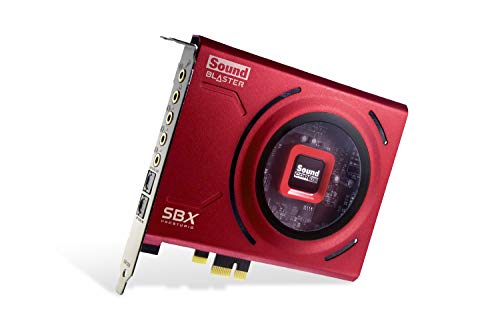
- 600Ω headphone amp for high impedance headphones
- 116 dB SNR with 24-bit/192 kHz playback
- 7.1 virtual surround and mic EQ presets
Best For: PC gamers wanting an internal surround card with strong headphone drive
UGREEN USB Adapter
Simple USB sound card for everyday headset use
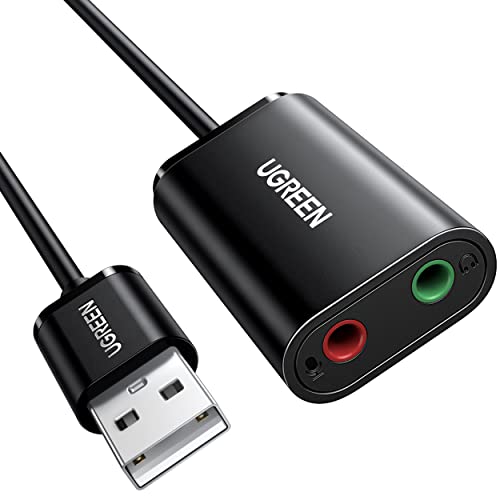
- Plug-and-play USB audio with no drivers
- Built-in DAC and wide device compatibility
- Compact, portable, and easy to use
Best For: Casual users who need a simple USB audio fix
Sound BlasterX G6
Portable USB DAC for demanding headphones and gaming

- Discrete amp drives up to 600Ω headphones
- 130 dB DNR with 32-bit/384 kHz DAC
- 7.1 virtual surround with Dolby Digital
Best For: Gamers needing a portable DAC/amp for high-impedance headphones
Cubilux 7.1 USB Card
Budget external surround audio for PC headphones

- 7.1 and 5.1 surround support
- Up to 384 kHz/24-bit headphone output
- Aluminum alloy case with plug-and-play setup
Best For: Budget buyers who want easy external surround audio
Editor Pick
Creative Sound Blaster AE-7 Hi-Res PCIe Gaming Sound Card and ACM
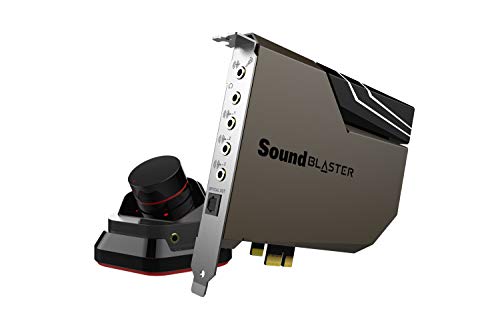
- Drives up to 600Ω headphones with Xamp bi-amp.
- ESS SABRE-class DAC with 127 dB DNR.
- Audio Control Module gives quick desktop access.
Best For: PC gamers and audiophiles needing strong PCIe headphone drive
Best Value Hi-Res Upgrade
Creative Sound Blaster AE-X Hi-Res PCIe Sound Card

- ESS ES9039Q2M DAC with up to 130 dB SNR.
- Built-in amp delivers up to 350mW at 32Ω.
- 10-band EQ and AutoEq for tuning.
Best For: Desktop users wanting a focused hi-res PCIe upgrade
Best USB Gaming Choice
Fosi Audio C3 Gaming DAC Amp for PC

- 320mW x2 output supports 16–300Ω headphones.
- Native 7.1 surround with HRTF processing.
- StepSense helps highlight footsteps in FPS games.
Best For: FPS players wanting a USB DAC amp with gaming features
Budget Hi-Res PCIe Upgrade
Creative Audigy Fx Pro for PC audio

- 32-bit / 384 kHz playback
- Discrete 7.1-channel analog output
- Low-profile PCIe card with SPDIF and headset inputs
Best For: PC gamers needing a compact internal audio upgrade
Desktop DAC/Amp Flex Pick
Sound Blaster G8 for multi-device gaming

- Dual USB-C inputs for two devices
- Discrete Xamp bi-amplifier for headphones
- Up to 32-bit / 384 kHz playback
Best For: Desk setups needing an external DAC/amp with multi-device use
High-Drive PCIe Gaming Choice
Sound BlasterX AE-5 Plus for demanding headphones
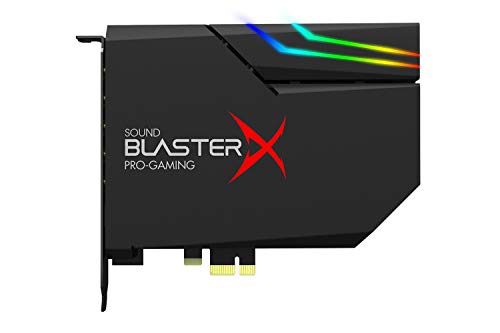
- Drives headphones up to 600Ω
- 1Ω output impedance and Xamp bi-amp
- 32-bit / 384 kHz with Dolby Digital Live and DTS
Best For: PC gamers with high-impedance headphones
Creative Z SE – PCIe gaming card for clean, high-power headphone output
If you want a gaming sound card for high impedance headphones, the Creative Sound Blaster Z SE is built around that use case. Its 600Ω headphone amp, 24-bit/192 kHz playback, and 116 dB SNR make it a strong choice for PC gamers who want better control, clearer audio, and software tuning without moving to an external DAC.
Best For: PC gamers with demanding headphones who want an internal PCIe upgrade with surround processing and mic tools.
Pros:
- 600Ω headphone amp suits high impedance headphones
- Up to 116 dB SNR and 24-bit/192 kHz audio
- 7.1 virtual surround plus discrete 5.1 for speakers
- Mic EQ presets and CrystalVoice noise reduction
Cons:
- Internal PCIe install is less flexible than USB options
- Best features are centered on PC use
This is a practical pick if you want an internal card that can push tougher headphones while still adding gaming-focused software features. It balances power, clarity, and surround tools in one PCIe package.
UGREEN USB Adapter – Simple USB sound card for everyday headset use
For a basic gaming sound card for high impedance headphones, this UGREEN USB adapter is more of a simple USB audio upgrade than a power-focused amp. It offers plug-and-play setup, a built-in DAC, and broad device support, but its 16-bit/48 kHz output and compact design point it toward casual headset use rather than demanding audiophile headphones.
Best For: Easy USB audio replacement for laptops, desktops, and consoles where convenience matters most.
Pros:
- Plug-and-play with no drivers or external power
- Built-in DAC for cleaner audio than basic onboard jacks
- Wide compatibility with PCs, Mac, PS5, PS4, and more
- Very small and easy to carry
Cons:
- 16-bit/48 kHz output is modest for higher-end audio needs
- Not positioned as a dedicated high-impedance headphone amp
This is a straightforward fix when you mainly need reliable USB headset audio. If your priority is driving high impedance headphones with more authority, other options in this roundup are better suited.
Sound BlasterX G6 – Portable USB DAC for demanding headphones and gaming
If you want a gaming sound card for high impedance headphones, the Sound BlasterX G6 is the strongest fit here. Its discrete headphone amp is designed to drive sensitive 8Ω IEMs through studio-grade 600Ω headphones, while the 130 dB SNR, 32-bit/384 kHz DAC, and Dolby Digital support give it serious headroom for both games and media.
Best For: Gamers who want a portable USB DAC/amp that can handle everything from sensitive IEMs to 600Ω headphones.
Pros:
- Discrete headphone amp supports up to 600Ω headphones
- 130 dB DNR and 32-bit/384 kHz DAC
- 7.1 virtual surround plus Dolby Digital decoding
- Scout Mode and profile buttons add gaming convenience
Cons:
- USB external design may not suit those wanting an internal card
- Feature set is geared more toward PC and console gaming than simple stereo listening
Among these options, this is the most complete choice for high-impedance headphones. It combines real amp power with strong gaming features, making it a versatile upgrade for serious players.
Cubilux 7.1 USB Card – Budget external surround audio for PC headphones
This Cubilux model is a budget-minded gaming sound card for high impedance headphones only in the broadest sense, since the listing emphasizes surround output and high sample rates rather than amplifier power. It is best viewed as a compact USB audio interface for laptops and PCs that want easy 7.1/5.1 support, mic input, and a metal shell to help reduce interference.
Best For: PC and Mac users who want an affordable external surround adapter with simple plug-and-play setup.
Pros:
- 7.1 and 5.1 surround support for games and movies
- Up to 384 kHz/24-bit headphone output
- Aluminum alloy case helps isolate interference
- Plug-and-play with no external power needed
Cons:
- No dedicated high-impedance headphone amp is listed
- Not compatible with Windows XP, 7, or 8
This is a sensible low-friction audio add-on if you mainly want surround processing and cleaner desktop sound. For high impedance headphones specifically, the stronger amplifier options above are the safer bet.
Editor Pick – Creative Sound Blaster AE-7 Hi-Res PCIe Gaming Sound Card and ACM
If you want a gaming sound card for high impedance headphones with serious output and clean detail, the Creative Sound Blaster AE-7 is built for that job. Its discrete Xamp headphone amp, 1Ω output impedance, and support for headphones up to 600Ω make it a strong fit for demanding desktop setups, while the ESS SABRE-class DAC targets very high-resolution playback.
Best For: PC gamers and audiophiles who want a PCIe card that can drive high-impedance headphones cleanly.
Pros:
- Xamp discrete headphone bi-amp drives headphones up to 600Ω.
- ESS SABRE-class 9018 DAC with 127 dB DNR and 32-bit/384 kHz playback.
- Audio Control Module adds convenient volume and headphone/mic access.
- Supports virtual surround up to 7.1 for headphones and speakers.
Cons:
- Requires a PCIe slot and a desktop PC setup.
- Surround and processing features are software- and platform-dependent on Windows.
The AE-7 is the strongest all-around choice here if your priority is powering high-impedance headphones without sacrificing clarity. It combines serious amplification with high-end conversion and useful desktop controls, making it well suited to both gaming and music listening.
Best Value Hi-Res Upgrade – Creative Sound Blaster AE-X Hi-Res PCIe Sound Card
The Creative Sound Blaster AE-X is a practical gaming sound card for high impedance headphones if you want a streamlined PCIe upgrade with strong headphone power. It pairs a reference-grade ESS ES9039Q2M DAC with a built-in amp rated up to 350mW at 32Ω, giving desktop users a capable stereo solution for gaming, music, and low-latency playback.
Best For: Desktop users who want a high-resolution PCIe sound card with solid headphone amplification.
Pros:
- ESS ES9039Q2M DAC with up to 130 dB SNR.
- Built-in headphone amplifier delivers up to 350mW at 32Ω.
- Supports 32-bit/384 kHz, DSD256, and ASIO 2.3.
- 10-band parametric EQ and AutoEq in Creative Nexus.
Cons:
- Stereo output only, so it is not a surround-focused card.
- Built for desktops with a PCIe x1 slot and Windows platform support.
If you mainly want better DAC and amp quality in a clean PCIe package, the AE-X is a compelling option. It is less feature-heavy than the AE-7, but it still offers strong headphone power and useful tuning tools for a focused desktop audio upgrade.
Best USB Gaming Choice – Fosi Audio C3 Gaming DAC Amp for PC
The Fosi Audio C3 is a gaming sound card for high impedance headphones in a compact USB format, with enough output to handle headphones from 16 to 300Ω. It also adds native 7.1 surround, HRTF processing, and StepSense footstep enhancement, making it a practical pick for FPS players who want positional audio and a cleaner desktop setup.
Best For: FPS gamers who want a USB DAC amp with surround processing and easy console compatibility.
Pros:
- 320mW x2 output supports 16–300Ω headphones.
- Native 7.1 surround with HRTF for positional audio.
- StepSense enhancement highlights enemy movement and footsteps.
- USB-C connection with UAC mode switching for PC, PS5, and Switch.
Cons:
- Lower maximum headphone impedance than the AE-7.
- Best features depend on USB mode and device compatibility.
The C3 is the easiest plug-and-play option in this group, especially if you want gaming-focused processing without a PCIe install. It is a strong fit for competitive play, though its headphone drive range is more limited than the more powerful internal cards.
Budget Hi-Res PCIe Upgrade – Creative Audigy Fx Pro for PC audio
If you want a gaming sound card for high impedance headphones without going all-in on a premium DAC/amp stack, the Creative Sound Blaster Audigy Fx Pro is a straightforward PCIe upgrade. It focuses on clean hi-res playback, surround output, and flexible PC connectivity, making it a practical choice for desktop users who want better audio control from an internal card.
Best For: PC gamers who want a compact internal sound card with hi-res playback and 7.1 analog support.
Pros:
- 32-bit / 384 kHz playback with up to 120 dB SNR for clean, detailed audio
- Supports discrete 7.1-channel analog output for immersive PC gaming
- Includes headset, mic-in, line-in, and SPDIF connectivity for flexible setups
- Low-profile design with half-height bracket for smaller cases
Cons:
- Uses PCIe internal installation, so it is not as portable as a USB option
- Headphone tuning is handled through the Creative app features rather than hardware controls
Overall, this card is best viewed as a clean, compact audio upgrade for a Windows gaming PC. It is strongest when you want internal connectivity, hi-res playback, and surround support in one low-profile package.
Desktop DAC/Amp Flex Pick – Sound Blaster G8 for multi-device gaming
The Sound Blaster G8 is a USB dual DAC and headphone amp that works well when you need a gaming sound card for high impedance headphones across more than one device. With dual USB-C inputs, 32-bit / 384 kHz playback, and a discrete bi-amp design, it is built for desktop users who want strong headphone drive and flexible switching.
Best For: Gamers and desk setups that need a USB DAC/amp with dual-device connectivity and strong headphone output.
Pros:
- Dual USB-C inputs let you stream audio from two devices simultaneously
- Xamp discrete bi-amplifier drives left and right channels individually
- Up to 32-bit / 384 kHz playback and 130 dB dynamic range
- Sound Blaster Acoustic Engine adds gaming-oriented audio enhancements
Cons:
- Uses USB instead of an internal PCIe connection
- Surround output is listed as 5.1, not full 7.1 discrete analog
For buyers who want an external desktop solution, the G8 offers a strong mix of flexibility and headphone-focused performance. It is especially appealing if you want to switch between devices while keeping hi-res playback and gaming features in one unit.
High-Drive PCIe Gaming Choice – Sound BlasterX AE-5 Plus for demanding headphones
If your priority is a gaming sound card for high impedance headphones, the Sound BlasterX AE-5 Plus is the most power-focused option here. Its discrete Xamp headphone amp is rated to drive studio-grade headphones up to 600 ohms, while the SABRE32 PCIe DAC and surround processing make it a strong fit for serious PC gaming audio.
Best For: PC gamers with high-impedance or planar-magnetic headphones who want a powerful internal card.
Pros:
- Xamp discrete headphone bi-amp drives headphones up to 600Ω
- 1Ω output impedance supports demanding headphone loads
- 32-bit / 384 kHz playback with 122 dB DNR for detailed audio
- Dolby Digital Live, DTS Encoding, and 7.1 surround support
Cons:
- Requires PCIe x4 installation inside a Windows PC
- RGB lighting may be unnecessary if you only want audio performance
In practical terms, this is the strongest match for buyers with tougher-to-drive headphones who want an internal gaming card. It combines headphone power, hi-res playback, and surround features in one desktop-oriented package.
How We Picked the Best Gaming Sound Card for High Impedance Headphones
For this roundup, we prioritized output power, impedance support, noise performance, gaming features, and connection flexibility. A good Gaming Sound Card for High Impedance Headphones should not only get loud enough, but also maintain clarity when driving harder-to-run models.
We also weighed platform compatibility, surround processing, mic input quality, and whether the device is better suited for a desktop tower, laptop, or console setup.
Quick Comparison
PCIe cards are usually the best fit for stationary PCs and often offer the cleanest integration for a full desktop build. USB DAC/amp units are easier to move between devices and are better for laptops, PS5, and plug-and-play use. If you want the most control and the strongest headphone drive, look closely at models with dedicated amplification and higher output ratings.
Key Buying Factors for a Gaming Sound Card for High Impedance Headphones
Power and Impedance Support
Check whether the device can comfortably drive your headphones at their actual impedance. High impedance alone does not tell the whole story, but it is a good starting point for judging whether you need a stronger amp stage.
Noise Floor and Signal Quality
Cleaner audio matters in games as much as in music. Lower hiss, better dynamic range, and higher signal-to-noise performance can improve both quiet detail and overall clarity.
Connection Type
Choose PCIe if you want a permanent PC upgrade and USB if you need portability or cross-platform compatibility. USB models are often the simplest answer for Gaming Sound Card for High Impedance Headphones users who switch between devices.
Gaming Features
Virtual surround, footstep enhancement, mic processing, and hardware volume control can all be useful, but they should complement—not replace—good amplification and clean output.
Who Should Buy Which Gaming Sound Card for High Impedance Headphones?
Choose a PCIe card if you want a dedicated desktop audio upgrade and plan to keep the device in one PC. Choose a USB DAC/amp if you need flexibility, console support, or a cleaner desk setup without opening your case. Budget buyers should focus on the simplest model that still provides enough power for their headphones, while enthusiasts should look for better DAC sections, stronger amps, and more refined control.
If your current headset sounds too quiet, too flat, or too sharp at higher volumes, upgrading the audio chain can make a noticeable difference. The best match is the one that fits your platform, your headphone load, and the features you will actually use every day.