A reliable power conditioner can make a stage or studio rack easier to manage, while a built-in voltage display helps you spot unstable or unexpected power before it affects connected equipment.
We compared 10 stage power conditioners with voltage displays across outlet count, current capacity, sequencing controls, monitoring features, and rack-friendly design to help you choose the right fit for your setup.
Best 10 Stage Power Conditioners with Voltage Displays Picks for 2026
Compact Sequencing Pick
Pyle PCO875 10-Outlet Power Sequencer

- 10 outlets with two always-on front connections
- Digital LCD voltage display and USB port
- 1U rack-mount design with surge protection
Best For: Small rack-based audio and home-theater systems
Metering Specialist
Furman Elite-15 DM i Power Conditioner

- Digital voltmeter and ammeter monitor system power
- 13 outlets with SMP surge suppression
- LiFT filtering and EVS shutdown protection
Best For: Audio racks where voltage and current monitoring are priorities
Flexible 20A Control

- Eight independently controlled sequenced outlets
- 20A, 2,000W capacity with LCD voltage display
- Bypass mode and external remote-switch input
Best For: Complex audio racks needing granular power control
Regulated Power Choice
Furman P-1800 AR Voltage Regulator
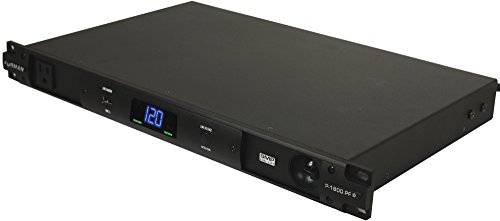
- Regulates 97–137V input to stable 120V output
- Digital voltage and current meters
- Nine outlets with isolated banks and advanced protection
Best For: Professional systems facing unstable incoming power
Best for Zoned Protection

- 10 protected outlets with three surge-protected zones
- LED voltmeter for quick power monitoring
- Pullout light and 15A protection for rack use
Best For: Stage and studio racks needing zoned protection
Best for Sequential Startup
Depusheng D228 Power Conditioner

- Real-time voltage display for easier operation
- Eight switched and two unswitched outlets
- One-second delayed channel sequencing
Best For: Rack-mounted audio systems needing orderly power control
Best for High-Power Connectivity

- Up to 3,000W total output with channel control
- LCD voltage display and eight status indicators
- USB, Type-C, and 10 total sockets
Best For: Larger audio racks needing capacity and connectivity
Stage Sequencing Pick

- Eight sequenced and two always-on outlets
- Front LCD real-time readout
- Spike protection and EMI/RFI filtering
Best For: Stage, studio, and home-theater racks needing sequenced power
High-Capacity Control Pick

- 20 amps and 2,000 watts of capacity
- Large LCD voltage monitoring
- External dry-contact switch and 110–230V support
Best For: Higher-demand audio racks and flexible power sequencing
Compact Sequential Power Pick

- Eight outlets in a compact 1U rack design
- Precise digital real-time voltage display
- One-second delayed channel switching
Best For: Compact stage, studio, KTV, and classroom racks
Compact Sequencing Pick – Pyle PCO875 10-Outlet Power Sequencer
The Pyle PCO875 is a practical entry point for stage power conditioners with voltage displays, combining a digital voltage readout, surge protection, and 10 outlets in a 1U rack-mount chassis. Its 2,000-watt capacity and front USB port make it useful for compact studio, home-theater, and small stage systems.
Best For: Small rack-based audio setups that need multiple outlets, basic sequencing, and front-panel voltage monitoring.
Pros:
- Provides 10 outlets: eight rear outlets and two always-on front outlets.
- Includes a digital LCD voltage display and USB charging port.
- Offers built-in spike, surge, overload, and voltage-fluctuation protection.
- Fits a single rack space and weighs about 6 pounds.
Cons:
- Its 13-amp, 2,000-watt rating is less suited to higher-demand systems.
- The supplied notes do not specify advanced voltage regulation or isolated outlet banks.
Choose the PCO875 when outlet count, rack efficiency, and basic voltage visibility matter more than advanced regulation features. It is a straightforward option for keeping smaller systems organized and protected.
Metering Specialist – Furman Elite-15 DM i Power Conditioner
The Furman Elite-15 DM i is a strong choice among stage power conditioners with voltage displays when real-time electrical monitoring is a priority. Its digital voltmeter and ammeter show line voltage and system current draw, while Furman’s filtering, surge suppression, and extreme-voltage shutdown protect connected equipment.
Best For: Performers, studios, and system operators who want detailed voltage and current monitoring in a 15-amp rack conditioner.
Pros:
- Displays both incoming voltage and total system current draw digitally.
- Uses SMP non-sacrificial surge suppression for durable protection.
- LiFT linear filtering is designed to support a low noise floor.
- Includes EVS extreme-voltage shutdown and 13 outlets.
Cons:
- Its 15-amp rating may not fit systems requiring 20-amp capacity.
- At 14 pounds, it is heavier than more basic rack conditioners.
The Elite-15 DM i stands out for operators who need more than a single voltage reading. Its combined metering and Furman protection features make it a monitoring-focused option for professional audio racks.
Flexible 20A Control – MICNAUX 10-Outlet Sequencer
The MICNAUX rack conditioner adds hands-on control to the category of stage power conditioners with voltage displays. It combines a 20-amp, 2,000-watt design with eight independently controlled sequenced outlets, two always-on outlets, a large LCD voltage display, bypass mode, and an external remote-switch connection.
Best For: Larger audio rigs that benefit from individually managed outlet groups, sequencing, and remote operation.
Pros:
- Offers 10 outlets, including eight sequenced rear outlets and two always-on front outlets.
- Provides eight independent rear-panel controls with front indicators.
- Supports 20 amps, 2,000 watts, and 110–230V input compatibility.
- Includes a large LCD voltage display, bypass mode, and external dry-contact switch.
Cons:
- The supplied specifications list 110-volt input and output details alongside universal-voltage compatibility, so installation requirements should be confirmed.
- Its many controls may be unnecessary for simple plug-and-play setups.
For complex racks, the MICNAUX offers unusually granular power management at this size and price category. It is most compelling when independent sequencing and remote control are as important as voltage visibility.
Regulated Power Choice – Furman P-1800 AR Voltage Regulator
The Furman P-1800 AR is built for users who need regulated output as well as monitoring. Among stage power conditioners with voltage displays, it is distinguished by True RMS regulation that converts a 97–137V input range to a stable 120V output, along with surge protection, noise filtering, extreme-voltage shutdown, and front-panel meters.
Best For: Professional audio systems exposed to voltage sags, brownouts, or variable incoming power.
Pros:
- Regulates 97–137V input to approximately 120V output within ±5V.
- Provides real-time digital voltage and current metering.
- Combines non-sacrificial surge suppression, linear filtering, and extreme-voltage shutdown.
- Includes nine outlets in isolated banks, a USB charger, and a BNC gooseneck-lamp connector.
Cons:
- Its 15-amp, 1,800-watt capacity is lower than some 20-amp conditioners.
- At about 19.2 pounds, it is a relatively heavy rack component.
- Voltage regulation may be more capability than simple, stable-power setups require.
The P-1800 AR is the most voltage-management-focused option in this group. Select it when stabilizing inconsistent mains power is a central concern, not merely checking voltage at the rack.
Best for Zoned Protection – PMX-3300 Power Conditioner
For stage power conditioners with voltage displays, the Soundavo PMX-3300 offers a practical combination of visible voltage monitoring, surge protection, and rack-friendly power distribution. Its LED voltmeter helps you check power levels at a glance, while the 10 protected outlets and three surge-protected zones support connected equipment.
Best For: Stage, studio, and rack setups that need zone-based protection and a visible voltage reading.
Pros:
- LED voltage display makes power levels easy to monitor.
- Ten protected outlets and three surge-protected zones provide flexible distribution.
- Includes a pullout light for visibility in darker rack spaces.
- 15A rating and 6,500A surge protection support general equipment protection.
Cons:
- Its 120V, 15A design may not suit higher-demand power systems.
- The supplied notes do not specify a power-sequencing function.
The PMX-3300 is a straightforward choice when outlet count, surge protection, and an easy-to-read LED display matter more than advanced sequencing controls.
Best for Sequential Startup – Depusheng D228 Power Conditioner
Among stage power conditioners with voltage displays, the Depusheng D228 stands out for combining real-time voltage monitoring with orderly power sequencing. Eight switched rear outlets and two unswitched front outlets give you flexible access, while one-second intervals between channel groups help reduce startup and shutdown impact on connected audio equipment.
Best For: Rack-mounted audio systems that benefit from sequenced switching and clear voltage readouts.
Pros:
- Real-time display shows the current voltage value clearly.
- Eight switched rear outlets plus two unswitched front outlets support varied connections.
- One-second delayed channel switching helps organize startup and shutdown.
- 1U rack-mount construction saves space in equipment racks.
Cons:
- The unit is rated as a 10A power conditioner, which may limit heavier systems.
- The supplied notes do not provide a surge-protection rating.
The D228 is a sensible pick for audio users who want a compact sequencer with a precise voltage display and a mix of switched and always-available outlets.
Best for High-Power Connectivity – ST-368 Rack Power Controller
For stage power conditioners with voltage displays, the ST-368 pairs a high-capacity rack design with real-time LCD monitoring and convenient device charging. It provides eight rear sockets, two front normally open sockets, independent channel switches, USB and Type-C charging, and filtering intended to suppress RF and electromagnetic interference.
Best For: Larger audio racks that need high output capacity, channel control, voltage monitoring, and front-panel charging.
Pros:
- High-power design supports up to 3,000W total output according to the supplied specifications.
- LCD voltage display and eight LED indicators make system status easier to track.
- Eight rear sockets and two front sockets accommodate multiple devices.
- USB and Type-C ports add convenient front-panel charging.
Cons:
- The supplied notes list 3,000W maximum total output despite the 3,300W product title.
- The notes do not provide a specific surge-protection rating.
- Its 1U rack format and 8.63-pound weight may be more than small setups require.
The ST-368 is best suited to demanding, organized rack systems where output capacity and independent channel management are as important as voltage visibility.
Stage Sequencing Pick – Sound Town STPS-1028
If you need stage power conditioners with voltage displays, the Sound Town STPS-1028 combines real-time monitoring with orderly power control. Its 1U rack-mount design provides eight sequenced outlets, two always-on outlets, individual outlet switches, and a USB charging port for flexible rig management.
Best For: Stage, studio, and home-theater setups that need sequenced power and quick front-panel monitoring.
Pros:
- Eight sequenced outlets help power speakers and other equipment in order.
- Front LCD provides a real-time data readout.
- Includes spike protection, EMI/RFI filtering, two always-on outlets, and a USB port.
- Supports up to 15 amps in a compact 1U rack format.
Cons:
- Only eight outlets are sequenced; the two additional outlets are always-on.
- The supplied notes do not specify the exact LCD measurements shown.
The STPS-1028 is a practical choice when organized startup, rack efficiency, and visible electrical information matter more than maximum outlet count.
High-Capacity Control Pick – MIZISNR PMX-2000
For buyers comparing stage power conditioners with voltage displays, the MIZISNR PMX-2000 stands out with a 20-amp, 2,000-watt design and a large LCD for real-time voltage monitoring. It offers eight sequenced rear outlets, two front always-on outlets, independent switches, and an external dry-contact switch.
Best For: Larger audio racks and international-use scenarios requiring higher capacity and flexible sequencing control.
Pros:
- 20-amp, 2,000-watt capacity with 2P surge protection.
- Eight sequenced outlets have independent switches and indicators.
- 110–230V universal voltage design with real-time LCD monitoring.
- Includes an external dry-contact switch and a two-year warranty description.
Cons:
- Its 18.6-inch depth may require checking available rack space.
- The product is rated for 20 amps, so connected equipment still needs to remain within the system’s limits.
With its higher stated capacity, universal-voltage support, and remote-switch option, the PMX-2000 is the most feature-rich choice here for demanding rack-based audio systems.
Compact Sequential Power Pick – Depusheng D328
The Depusheng D328 is a straightforward option for stage power conditioners with voltage displays, pairing eight outlets with a precise digital real-time voltage readout. Its chip-controlled sequencing switches channel groups one second apart to help reduce the current impact of turning audio equipment on or off.
Best For: Stage, KTV, classroom, conference-room, and studio users seeking compact rack-mounted sequencing.
Pros:
- Digital display shows the current voltage in real time.
- One-second delays support orderly power-up and power-down.
- 30A relay and overload/short-circuit protection are designed for high-power systems.
- Compact 1U aluminum-and-metal housing saves rack space.
Cons:
- Its listed output current is 10 amps, lower than the MIZISNR option.
- The manufacturer warranty description is limited to 90 days from purchase.
- Only eight outlets are provided.
The D328 offers useful sequencing and clear voltage visibility in a compact enclosure, making it a sensible fit when rack space and simple operation are priorities.
How We Picked the Best Stage Power Conditioners with Voltage Displays
We focused on the features that matter in real rack systems: visible voltage monitoring, outlet layout, rated amperage and wattage, surge protection, power sequencing, and ease of installation. We also considered whether each unit offers independent outlet or zone control, front-panel access, USB charging, pullout lighting, or voltage regulation.
Specifications deserve careful attention. A high outlet count does not automatically mean a unit can safely support every amplifier, powered speaker, or touring rack. The conditioner should match the electrical requirements of the equipment connected to it and the available circuit.
Quick Comparison
- Best for voltage regulation: Choose a model with automatic regulation if your venue power fluctuates significantly.
- Best for sequencing: Look for staged turn-on and turn-off controls to reduce startup surges and speaker pops.
- Best for flexible racks: Independent outlet switches or multiple zones make it easier to isolate devices.
- Best for basic monitoring: A bright digital voltmeter provides a quick view of incoming or operating voltage.
- Best for convenience: USB, Type-C charging, pullout lights, and front-panel controls can simplify live setup.
Key Buying Factors for Stage Power Conditioners with Voltage Displays
Voltage Display Versus Voltage Regulation
A voltage display shows electrical conditions; it does not necessarily correct them. If you regularly play in locations with unreliable power, consider a true voltage regulator rather than a standard conditioner with a meter.
Current Rating and Connected Load
Check the unit’s amp rating and compare it with the combined demand of your equipment. Leave practical headroom, especially when connecting amplifiers, powered mixers, lighting, or other high-draw devices. Never treat a stated wattage figure as permission to exceed the circuit’s rating.
Sequencing and Outlet Control
Sequencing can turn equipment on in an orderly progression, helping reduce inrush current and unwanted noise. Independent switches or zones are useful when some devices must remain powered while others are shut down.
Rack Fit and Operating Environment
Confirm the rack height, depth, front and rear outlet access, cable clearance, and display visibility. For touring systems, prioritize solid construction, clear labeling, and controls that are difficult to activate accidentally.
Who Should Buy Which Stage Power Conditioners with Voltage Displays?
Choose a straightforward 10-outlet conditioner for a compact studio, rehearsal rack, or small PA where monitoring and basic protection are the priorities. Choose a sequencer with independent controls for a larger rack containing several processors, mixers, amplifiers, or powered accessories. Choose a regulated model when voltage swings are a recurring concern and your equipment needs a steadier output. Choose a model with USB or Type-C charging if phones, tablets, or wireless accessories are part of your setup.
Finally, verify the manufacturer’s protection claims, warranty terms, plug type, and electrical compatibility before purchase. A power conditioner is one part of a safe power plan: use properly rated cables, avoid overloaded circuits, and follow venue and equipment instructions.