The best smart home hubs bring devices, platforms, and routines together so your home responds with less app switching and fewer compatibility headaches.
We selected 10 smart home hubs for different priorities, including local automation, Matter support, security management, voice control, and easy touchscreen access.
Best 10 Smart Home Hubs Picks for 2026
Best DIY Automation Hub

- Preinstalled Home Assistant OS
- Local data storage and advanced automations
- USB expansion for Zigbee, Z-Wave, and Thread
Best For: DIY-minded homeowners seeking flexible whole-home control
Best Smart Display Hub
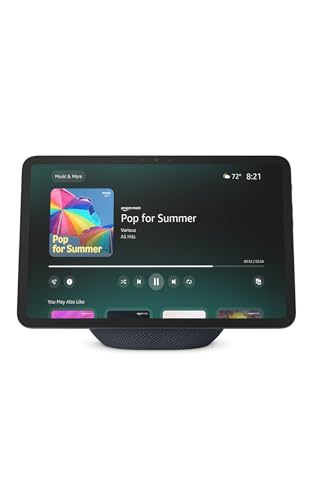
- Built-in hub for compatible Alexa devices
- 11-inch Full-HD touchscreen with spatial audio
- Controls cameras, lights, thermostats, and routines
Best For: Alexa households wanting a screen-based command center
Best Local-First Hub

- Runs automations locally for fast response
- Supports Matter, Z-Wave, Zigbee, and Bluetooth
- Works with Alexa, Google Home, and Apple HomeKit
Best For: DIY users prioritizing offline reliability and advanced rules
Best Wall-Mounted Control Panel

- Customizable dashboard for devices and cameras
- Built-in Wi-Fi, Zigbee, Matter, Thread, and more
- Supports wall mounting and security controls
Best For: Families wanting a dedicated Alexa control panel
Best Matter Bridge
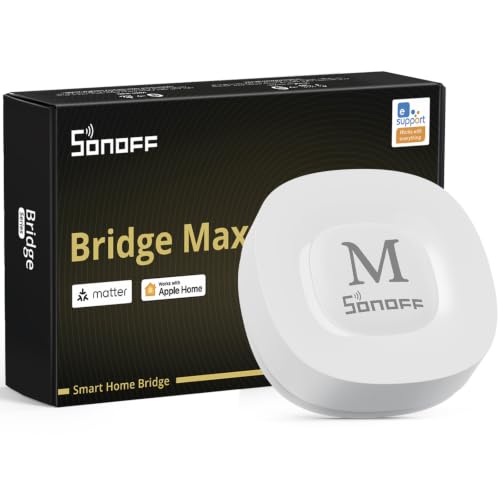
- Bridges Zigbee and BTHome devices to Matter platforms
- Local web console with Ethernet and Wi-Fi
- Supports Home Assistant and local security automations
Best For: Cross-platform Zigbee integration
Best for Tapo Security

- Manages up to 16 cameras and 64 sensors
- Local 16GB storage with optional SATA expansion
- HDMI output, alarm, and two-way audio
Best For: Centralized Tapo camera and sensor management
Best for Comfort

- 15.6-inch Full HD family dashboard
- Alexa smart-home controls with Fire TV
- Video calling and built-in camera privacy shutter
Best For: Visible household organization and Alexa control
Best for Eufy Security Ecosystems

- 16GB local storage, expandable to 16TB
- Supports up to 50 eufy devices
- Includes AI alerts and a 100dB siren
Best For: Eufy households prioritizing centralized security management
Best Multistandard Value
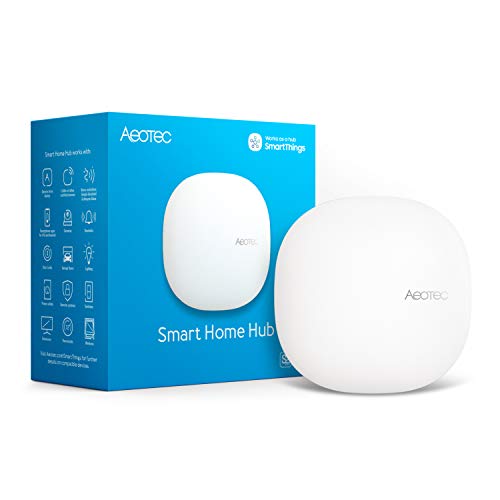
- Supports Matter, Zigbee, and Z-Wave Plus
- Works with Alexa and Google Home
- Uses Wi-Fi or Ethernet connectivity
Best For: North American homes with mixed-brand devices
Best for Advanced Local Automation

- Includes seven major smart-home technologies
- Supports over 50,000 devices
- Runs automations locally with energy tools
Best For: Large, mixed-brand homes needing advanced automation
Best DIY Automation Hub – Home Assistant Green
Home Assistant Green | Smart Home hub with Advanced Automation | Official Home Assistant Hardware
Check Price On AmazonHome Assistant Green is a practical entry point for smart home hubs if you want advanced automation without assembling the hardware yourself. Home Assistant OS is preinstalled, and setup starts by connecting the included power supply and Ethernet cable.
Best For: DIY-minded homeowners who want centralized control, local data storage, and flexible automation.
Pros:
- Home Assistant comes preinstalled for a straightforward start.
- Supports whole-home control and complex device automations.
- Compact, fanless, silent, and power efficient.
- Can expand connectivity with USB Zigbee, Z-Wave, and Thread devices.
Cons:
- Ethernet is the primary listed network connection.
- Zigbee, Z-Wave, and Thread connectivity require additional USB devices.
Green is a strong choice when flexibility and ownership of your home data matter more than a purely plug-and-play appliance experience.
Best Smart Display Hub – Echo Show 11
The Echo Show 11 combines a built-in smart home hub with an 11-inch Full-HD touchscreen, making it a good fit among smart home hubs for households that also want entertainment and at-a-glance information.
Best For: Alexa households that want device control, streaming, video calls, and routines from one screen.
Pros:
- Built-in hub controls compatible devices without a separate hub.
- 11-inch Full-HD display offers more viewing area than the Echo Show 8 (2025 release).
- Supports camera feeds, lights, thermostats, routines, and voice control.
- Includes spatial audio and a centered auto-framing camera.
Cons:
- Some Alexa+ and personalized features depend on supported services or subscriptions.
- Its screen-centered design may be more than needed for hub-only buyers.
Choose the Echo Show 11 if you want a visible command center that doubles as a media, recipe, calendar, and video-calling display.
Best Local-First Hub – Hubitat Elevation C-8 Pro
Hubitat Elevation C-8 Pro stands out among smart home hubs for local processing. Automations run directly on the hub, helping routines continue when the internet is unavailable while keeping device data at home.
Best For: Experienced DIY users who need multi-protocol compatibility, fast local automations, and advanced rules.
Pros:
- Local processing enables fast responses and offline automation operation.
- Supports Matter, Z-Wave 800 Series, Zigbee 3.0, and Bluetooth.
- Works with Alexa, Google Home, and Apple HomeKit.
- Offers Rule Machine and an AI-assisted routine builder without a required subscription.
Cons:
- Advanced features and integrations may appeal more to experienced DIY users.
- Its compact hub design does not include a built-in display for control.
The C-8 Pro is a compelling foundation for a protocol-diverse home, especially where reliability, local control, and detailed automation logic are priorities.
Best Wall-Mounted Control Panel – Echo Hub
The Echo Hub is a screen-based option among smart home hubs, designed to organize device controls, camera views, and routines in a customizable dashboard. Its built-in support for Wi-Fi, Bluetooth, Zigbee, Matter, Sidewalk, and Thread helps it connect with many compatible devices.
Best For: Families wanting a dedicated, customizable Alexa control panel for everyday smart home management.
Pros:
- Customizable dashboard lets you arrange sections and resize controls.
- Built-in hub supports Wi-Fi, Bluetooth, Zigbee, Matter, Sidewalk, and Thread devices.
- Can display cameras, activate routines, and help manage compatible security systems.
- Supports wall mounting and optional tabletop placement.
Cons:
- Wall-mount hardware, tabletop stands, and power-over-Ethernet accessories are sold separately.
- Some Ring-related features require Alexa+ and a compatible Ring subscription.
Echo Hub makes the most sense when you want a dedicated household dashboard rather than relying exclusively on phones or voice commands.
Best Matter Bridge – SONOFF Bridge Max
The SONOFF Bridge Max is one of the more flexible smart home hubs for connecting Zigbee, BTHome, and eWeLink devices with Matter-compatible platforms. Its local web console, Ethernet and Wi-Fi connectivity, and Home Assistant support make it a practical choice for users who prioritize local control and cross-platform integration.
Best For: Connecting compatible Zigbee devices to Apple Home, Alexa, Google Home, or Home Assistant.
Pros:
- Bridges Zigbee, BTHome, and eWeLink devices to Matter platforms.
- Supports local configuration without requiring cloud services.
- Works with Home Assistant through MQTT or device bridging.
- Includes a built-in 90 dB alarm for local security automations.
Cons:
- It is a Matter Bridge, not a Matter Controller, so it cannot add Matter devices directly.
- Its alarm and automation features depend on compatible sensors and setup.
The Bridge Max stands out when interoperability and local management matter more than a simple app-based setup. Confirm that your devices and desired platform are supported, especially if you need a true Matter controller.
Best for Tapo Security – Tapo H500 CentralHub
The Tapo H500 is a security-focused option among smart home hubs, combining camera management, local video storage, and sensor control in one device. It can coordinate up to 16 Tapo cameras and 64 Tapo Sub-G sensors, while built-in storage and optional SATA expansion help reduce reliance on subscriptions.
Best For: Tapo households that want centralized camera viewing, local recording, and sensor management.
Pros:
- Supports up to 16 Tapo cameras and 64 Tapo Sub-G sensors.
- Includes 16GB storage and supports an optional 2.5-inch SATA HDD or SSD up to 16TB.
- Offers HDMI viewing for up to four live camera feeds.
- Provides a 110 dB alarm, two-way audio, and WPA3 security.
Cons:
- Continuous recording is limited to up to four cameras.
- Facial recognition is unavailable in Illinois and Texas.
- The expanded storage drive is sold separately.
Choose the H500 if your setup is centered on Tapo cameras and sensors rather than broad third-party smart-home compatibility. Its local recording and HDMI output are especially useful for security monitoring, though the strongest benefits stay within the Tapo ecosystem.
Best for Comfort – Echo Show 15
The Echo Show 15 combines a large 15.6-inch Full HD display with Alexa smart-home controls, family organization tools, video calling, and built-in Fire TV. For shoppers comparing smart home hubs, it is a strong fit when a visible household dashboard and entertainment screen are just as important as device control.
Best For: Kitchens and shared spaces where calendars, lists, smart-home controls, streaming, and calls need to be visible in one place.
Pros:
- Large 15.6-inch 1080p display with customizable widgets.
- Controls compatible smart devices by voice or through the dashboard.
- Built-in Fire TV supports services including Prime Video, Netflix, YouTube, and Apple TV.
- Offers auto-framing video calls, 3.3x zoom, and camera privacy controls.
Cons:
- Some entertainment services may require subscriptions.
- Its smart-home control features are centered on Alexa-compatible devices.
- The larger display may be more suitable for a fixed location than a small countertop hub.
The Echo Show 15 is best viewed as a family command center rather than a dedicated protocol bridge. Its value comes from combining an at-a-glance household dashboard with entertainment, calling, and Alexa-based smart-home control.
Best for Eufy Security Ecosystems – HomeBase 3 Smart Security Hub
For shoppers seeking smart home hubs centered on security, the eufy Security HomeBase 3 provides local storage, device coordination, and automated protection for compatible eufy cameras, doorbells, and sensors. It supports up to 50 eufy devices and works through the eufy app.
Best For: Eufy households that want centralized security management without mandatory monthly storage fees.
Pros:
- Includes 16GB of built-in storage and supports expansion up to 16TB with a portable hard drive.
- Supports up to 16 cameras or doorbells plus 34 sensors, for a 50-device eufy ecosystem.
- Offers facial recognition, Daily Security Briefings, a 100dB siren, and cross-tracking support.
Cons:
- Designed for eufy devices rather than broad third-party smart-home compatibility.
- Expanded storage requires a separate portable hard drive.
HomeBase 3 is a focused choice rather than a universal smart home hub. Its strongest advantages are eufy-specific device capacity, local recording options, and security-focused alerts, making it most practical for buyers already building around eufy Security products.
Best Multistandard Value – Aeotec Smart Home Hub
The Aeotec Smart Home Hub is one of the more versatile smart home hubs for shoppers who want SmartThings automation with support for Matter, Z-Wave Plus, Zigbee, Wi-Fi, Alexa, and Google Home. It can connect over Wi-Fi or Ethernet and is managed in the SmartThings app.
Best For: North American homes combining devices from multiple smart-home ecosystems.
Pros:
- Supports Matter, SmartThings, Z-Wave Plus, Zigbee, and Wi-Fi devices.
- Works with Amazon Alexa and Google Home for app and voice control.
- Supports custom routines, with many automations running locally for improved speed and reliability.
- Offers both Wi-Fi and wired Ethernet setup.
Cons:
- Designed for use in North America.
- Z-Wave Plus support is specified for the V3 model.
This hub is a practical middle ground for users who want broad protocol support without moving to a more specialized automation platform. The SmartThings app, local automation capabilities, and flexible network connection make it a strong fit for mixed-device homes.
Best for Advanced Local Automation – Homey Pro (2026)
Homey Pro (2026) is a premium-minded option among smart home hubs, combining seven wireless and control technologies with local-first processing. It supports Wi-Fi, Zigbee, Z-Wave Plus, Bluetooth, infrared, Matter, and Thread, while Homey Flow handles routines and automations.
Best For: Enthusiasts building a large, brand-diverse smart home with advanced local automations.
Pros:
- Combines Wi-Fi, Zigbee, Z-Wave Plus, infrared, Bluetooth, Matter, and Thread in one hub.
- Works with more than 50,000 devices from over 1,000 brands, according to the supplied specifications.
- Processes automations locally, stores data on the hub, and minimizes cloud dependency.
- Supports energy monitoring, historical usage tracking, sensor alerts, and Advanced Flows.
Cons:
- The extensive feature set may be more than a simple smart-home setup requires.
- Compatibility can depend on available official or community-built Homey apps.
Homey Pro stands out for breadth and customization. Its protocol coverage and local-first design make it especially compelling for complex homes, while energy tools and Advanced Flows give experienced users room to build detailed automations.
How We Picked the Best Smart Home Hubs
We evaluated these Smart Home Hubs by looking at the capabilities that matter after setup: supported wireless standards, local versus cloud processing, automation depth, app quality, device compatibility, expandability, and everyday usability. We also considered whether each hub is best suited to a specific ecosystem, such as Alexa, SmartThings, Home Assistant, eufy Security, or Tapo.
No single hub is ideal for every household. A dedicated automation controller may be more powerful than a display-based hub, while a security hub may be the better choice if cameras and sensors are your priority.
Quick Comparison
| Best For | Recommended Hub | Why It Stands Out |
|---|---|---|
| Open-source automation | Home Assistant Green | Flexible control and advanced routines |
| Advanced multi-protocol control | Homey Pro (2026) | Broad wireless support and automation features |
| Power users | Hubitat Elevation C-8 Pro | Local processing with Zigbee, Z-Wave, and Matter |
| Alexa households | Amazon Echo Hub | Wall-friendly touchscreen control |
| Family organization | Amazon Echo Show 15 | Large display, widgets, and entertainment features |
| Security devices | eufy Security HomeBase 3 | Central management for compatible eufy products |
Key Buying Factors for Smart Home Hubs
Compatibility and Wireless Standards
Check whether the hub supports the devices you already own and the products you plan to buy. Zigbee and Z-Wave remain useful for dedicated sensors and switches, while Matter can simplify cross-platform compatibility. Thread support may also matter as newer low-power devices become more common.
Local Control and Reliability
Local processing can make automations faster and help them continue working during an internet outage. Cloud-dependent hubs can still be convenient, but review subscription requirements, account limitations, and what functions remain available offline.
Automation Depth and Usability
Some hubs focus on simple scenes and voice commands; others offer conditional logic, dashboards, schedules, and integrations for advanced routines. Choose the level of control you will realistically use rather than paying for complexity you do not need.
Display, Security, and Expansion
A screen-based hub is useful for household calendars, cameras, media, and quick controls. Security-focused hubs may offer storage, device management, or camera-specific features, but they are usually less universal than open automation platforms.
Who Should Buy Which Smart Home Hubs?
Choose Home Assistant Green or Hubitat if you want deep customization and dependable automation. Homey Pro is a strong fit for households combining several protocols and ecosystems. Amazon Echo Hub, Echo Show 11, or Echo Show 15 makes the most sense for Alexa users who want visible controls, voice access, and household information. Choose eufy HomeBase 3 or Tapo CentralHub when your priority is managing compatible security devices. Aeotec’s Smart Home Hub suits buyers building around SmartThings, while SONOFF Bridge Max is a practical choice for compatible SONOFF-focused setups.